
Intel 10CL025YE144I7G: A Comprehensive Look at the Low-Power FPGA for Embedded Systems
The landscape of embedded systems is continuously evolving, demanding components that offer a blend of high performance, flexibility, and exceptional power efficiency. At the forefront of this movement are low-power Field-Programmable Gate Arrays (FPGAs), and Intel's Cyclone 10 LP family stands as a prime example. The Intel 10CL025YE144I7G encapsulates this philosophy, providing a robust, reconfigurable platform tailored for power-sensitive applications.
As a member of the Cyclone 10 LP family, this device is architected from the ground up for low static and dynamic power consumption. Built on a mature, low-power process technology, it achieves a significant reduction in heat dissipation and extends battery life in portable devices, a critical advantage over competing FPGAs and application-specific integrated circuits (ASICs). This makes it an ideal candidate for applications where every milliwatt counts.
The part number "10CL025YE144I7G" itself reveals key specifications. The "025" denotes 24,576 logic elements (LEs), offering ample resources for complex logic implementation. The "YE144" specifies a 144-pin EQFP package, which is a surface-mount type suitable for automated assembly processes common in embedded design. The "I7" suffix indicates the industrial-grade temperature range (-40°C to 100°C), ensuring reliable operation in harsh environments outside of a climate-controlled office or lab.
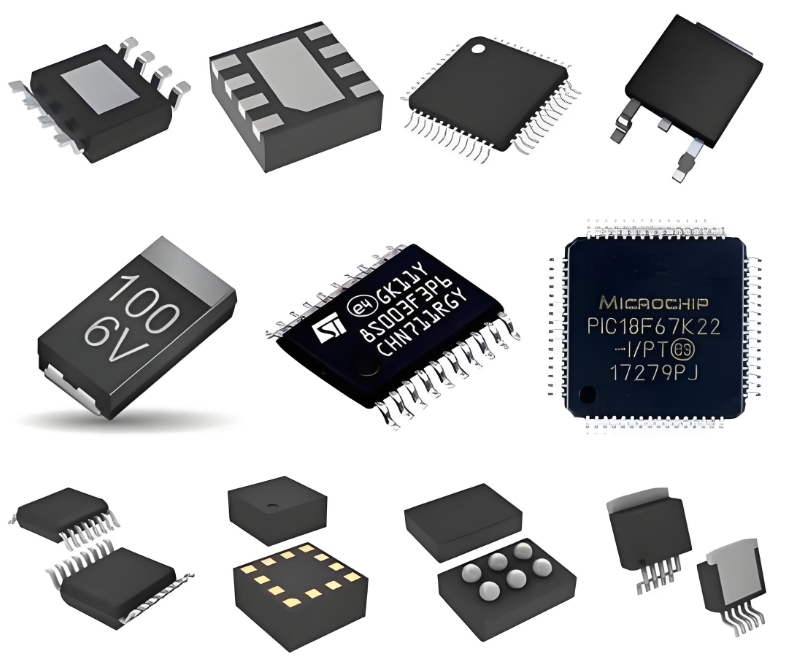
Beyond its core fabric, the 10CL025YE144I7G is rich in embedded memory and connectivity options. It features over 800 Kbits of embedded memory (M9K blocks), sufficient for buffering data or implementing FIFOs. For processing-intensive tasks, it incorporates embedded multipliers that can be configured for DSP functions, enabling signal processing without the need for an external processor. Its differential and single-ended I/O standards support interfaces like LVDS, which is crucial for high-speed data transmission.
A standout feature of this FPGA is its support for the widely adopted Nios II soft-core processor. This allows designers to create a custom System-on-a-Chip (SoC) by implementing a microprocessor subsystem entirely within the FPGA fabric. This integration drastically reduces the bill of materials (BOM), board space, and system power while providing unparalleled design flexibility.
In practice, the Intel Cyclone 10 LP 10CL025YE144I7G finds its home in a diverse array of applications. It is perfectly suited for sensor fusion and image processing in industrial machine vision systems, where real-time data from multiple sensors must be processed and filtered. In the automotive sector, it can be used for bridge functions, I/O expansion, and control logic. Its low-power nature also makes it excellent for portable medical devices, communication modules, and any embedded system requiring custom hardware acceleration without a power penalty.
Development is facilitated by the Quartus Prime software suite, Intel's powerful design environment. This platform provides a complete flow for design entry, synthesis, place-and-route, timing analysis, and programming, making the design process for this FPGA accessible and efficient.
ICGOODFIND: The Intel 10CL025YE144I7G is a compelling low-power FPGA that delivers an optimal balance of logic capacity, power efficiency, and embedded features. Its industrial temperature rating and support for soft-core processors make it a versatile and reliable choice for designers tackling the challenges of modern, power-constrained embedded systems.
Keywords: Low-Power FPGA, Embedded Systems, Intel Cyclone 10 LP, Nios II Processor, Industrial Temperature

